Beekeepers since 1962
Three generations of staying out of the bees' way
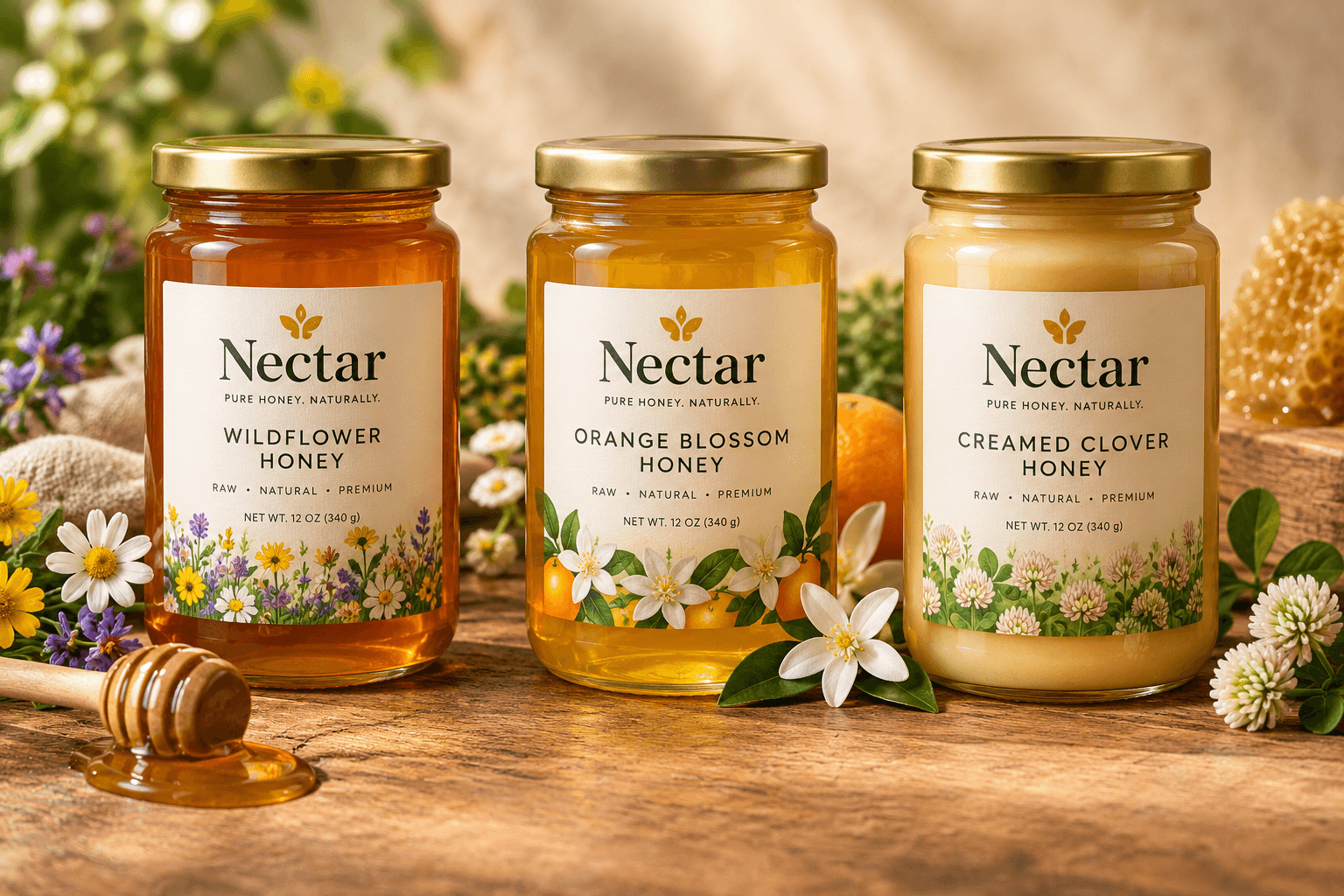
Nectar is a family apiary in northern Michigan with outyards in Florida and upstate New York. We keep bees, harvest what they can spare, and put it in glass with as few steps in between as possible.
How we work
Good honey needs nothing done to it
Most honey on a supermarket shelf has been heated to keep it clear and filtered hard enough to strip the pollen out. It pours nicely and it lasts forever on a shelf, but it has lost most of what made it interesting.
We do the opposite. We wait until the bees have capped the frames, spin the honey out cold, and strain it once through cloth to catch wax. Then it goes into jars. That is the entire process, and it is why our wildflower jar tastes like apple blossom one year and clover the next.
It also means the honey will crystallize eventually. That is not a defect — it is the clearest sign you are holding raw honey. Set the jar in warm water for ten minutes and it comes right back.
Our timeline
From eight hives to twelve hundred
1962
Eight hives and a hand crank
Our grandfather set his first hives behind the farmhouse and sold honey out of the back of a pickup at the county fair.
1994
The honey house
We built a proper extraction room so every jar could be filled, capped, and labelled in one clean place.
2011
Following the bloom
We began moving hives to the citrus groves and buckwheat fields, which is how our single-varietal jars were born.
Today
1,200 hives, same rules
Strained once, never heated, never blended to a formula. If the season tastes different, so does the jar.
What we stand on
Three rules we do not bend
Bee-first beekeeping
We leave enough honey in every hive to overwinter without sugar substitutes, and we never harvest from a colony that needs it more than we do.
Nothing added, nothing taken
No pasteurizing, no ultrafiltration, no corn syrup, no "honey blend". One ingredient: honey.
Honest labels
Every jar names the apiary and the season it came from. If we cannot trace it, we will not sell it.
Come taste this season
Every varietal we harvested this year is in the shop now, in small quantities, until it runs out.
Shop the harvest